News
- Details
- Category: News
 Through the Restore Illinois plan, many resources are available to families and communities across Illinois in an effort to help the state recover from the COVID-19 crisis. Please read below to learn about ongoing recovery efforts, including support for impacted businesses, local communities and units of government, and support for local residents for workforce training and rental assistance.
Economic Recovery
Back to Business Grants
The Back to Business program will distribute grants to promote recovery for small businesses hit hardest by the COVID-19 pandemic. To be eligible, businesses must have had revenues below $20 million in 2019 (below $35 million for hotels) and a reduction in revenue in 2020 due to COVID-19. Priority will be given to businesses in the hardest-hit sectors, business located in Disproportionately Impacted Areas, and businesses that have not yet received COVID-related state or federal assistance. Applications opened on August 18th. Businesses looking to apply or obtain additional information, may refer to the Back to Business page of the DCEO web site.
Rebuild Downtowns & Main Streets Grants
Rebuild Downtowns & Main Streets will provide capital grants to support economic recovery in downtowns that have experienced disinvestment, particularly in communities hardest-hit by COVID-19. Private businesses, nonprofit organizations, and local units of government are eligible to apply. Applications opened on September 10th and will close on January 10th. To apply or obtain more information, see the Notice of Funding Opportunity on DCEO’s web site.
Community Navigators
The Community Navigator program leverages 100+ community partners to help small businesses connect with emergency resources during the pandemic by investing in grassroots, community-based organizations. The program meets businesses where they are, providing tools and resources to help them apply for programs and assisting them to access to additional business support services. More information, as well as a search tool to find a community navigator near you, is available at the DCEO website.
Tourism Attractions & Festivals Grants
The Tourism Attraction and Festivals Grant program will help develop new or enhance existing tourism attractions located across the state. Eligible applicants include units of local government and not-for-profit and for-profit organizations. Funds may be utilized for capital projects, equipment, training, transportation, housing, receptions, entertainment, photography, and interpretive programs. Applications will be accepted on a rolling basis until funds are depleted. For more information, please see the Notice of Funding Opportunity.
Local Government Support
Local CURE
Through the Local CURE program, the Department of Commerce and Economic Opportunity has had the authority to cover costs incurred by local governments for emergency COVID-19 related expenses. Initially designed to cover eligible expenses from March 2020 through December 2020, the program has been extended to encompass expenditures through December 31, 2021. Program participants must submit reimbursement requests through https://dceocures.powerappsportals.com/. For additional information, you can review the Program Manual, visit the Local CURE Reporting Portal FAQs, or contact the Local CURE Support Team either through the Portal Help Desk or via email at
Non-Entitlement Units
The American Rescue Plan Act of 2021 appropriated funding to States for distribution to non-entitlement units of local government. Funds can be used to cover revenue losses and the costs of responding to the COVID-19 public health emergency or to its negative economic impact. The full list of elegible municipalities and allotments can be found here. To assist local governments as they claim their allotments, the State of Illinois has established The NEU Portal. Authorized representatives from each NEU can log into the portal, request their allotment and download all the required Treasury documentation. The NEU portal will close September 30th. Per Treasury guidance, NEUs that do not claim their allotments by that time will lose their allotments, which will be distributed to other NEUs as soon as early October. Information on NEU payments can be found on DCEO’s NEU site, including the payment status of specific local governments.
Housing and Humanitarian Assistance
Rental Assistance Program
The Rental Assistance Program, offered by the Illinois Department of Human Services through local community agency partners, is intended to keep families stably housed and prevent high incidents of evictions due to COVID-19. Illinois renters may be eligible for assistance if the tenant has experienced financial hardship due to the pandemic, is behind on rent and/or is at risk of experiencing homelessness or housing instability, and qualifies as low income. To apply, residents can visit https://www.illinoisrentalassistance.org/providers, find a provider nearby, and contact them. The provider will help residents determine eligibility and will help to submit an application.
- Details
- Category: News
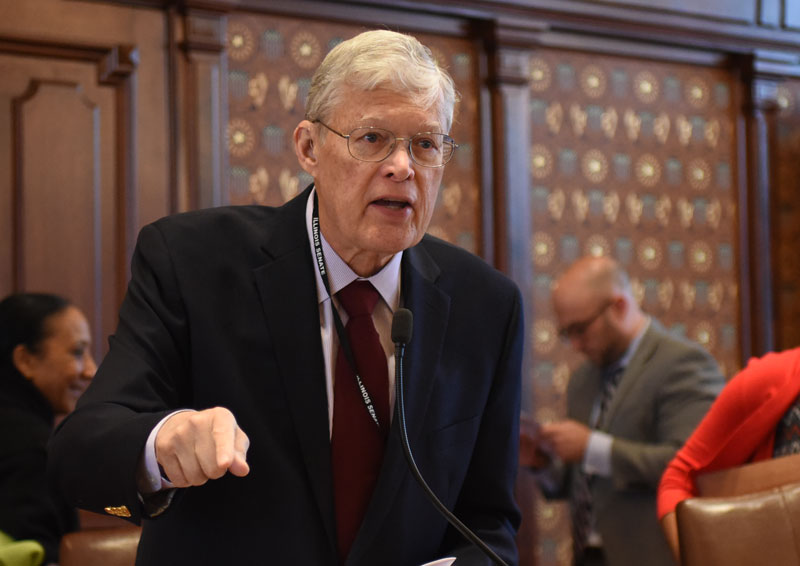
State Senator Dave Koehler (D-Peoria) issued the following statement on the passing of former state senator Bill Haine:
Early Monday morning a friend and former colleague passed away. Senator Bill Haine served the people of the 56th State Senate District, which includes Alton and the Metro East area of Illinois, from January 2003 until he retired from the Senate in January of 2019.
Bill was a humble but extremely capable man. He was a Vietnam War veteran, a lawyer and former State’s Attorney for Madison County, and a member of the Illinois State Board of Elections up to his passing. He and his wife Anna raised seven children and have 38 grandchildren and one great-grandchild, many of whom visited the Senate chambers from time to time.
I knew Bill as a fellow legislator and member of the Downstate Senate Democratic Caucus. His wit and insight into issues of the day were always illuminating. On the floor of the senate he earned the reputation as historian of both relevant and obscure information. Often he would break into debate and drop one of his famous anecdotes of insight upon the conversation, which would usually provoke a laugh. We would all marvel at his depth of knowledge.
Bill Haine was a good friend to all who knew him. He was a legislator’s legislator. He was most of all an honest and faithful servant. We have been blessed to know him, and we will miss him.
- Details
- Category: News
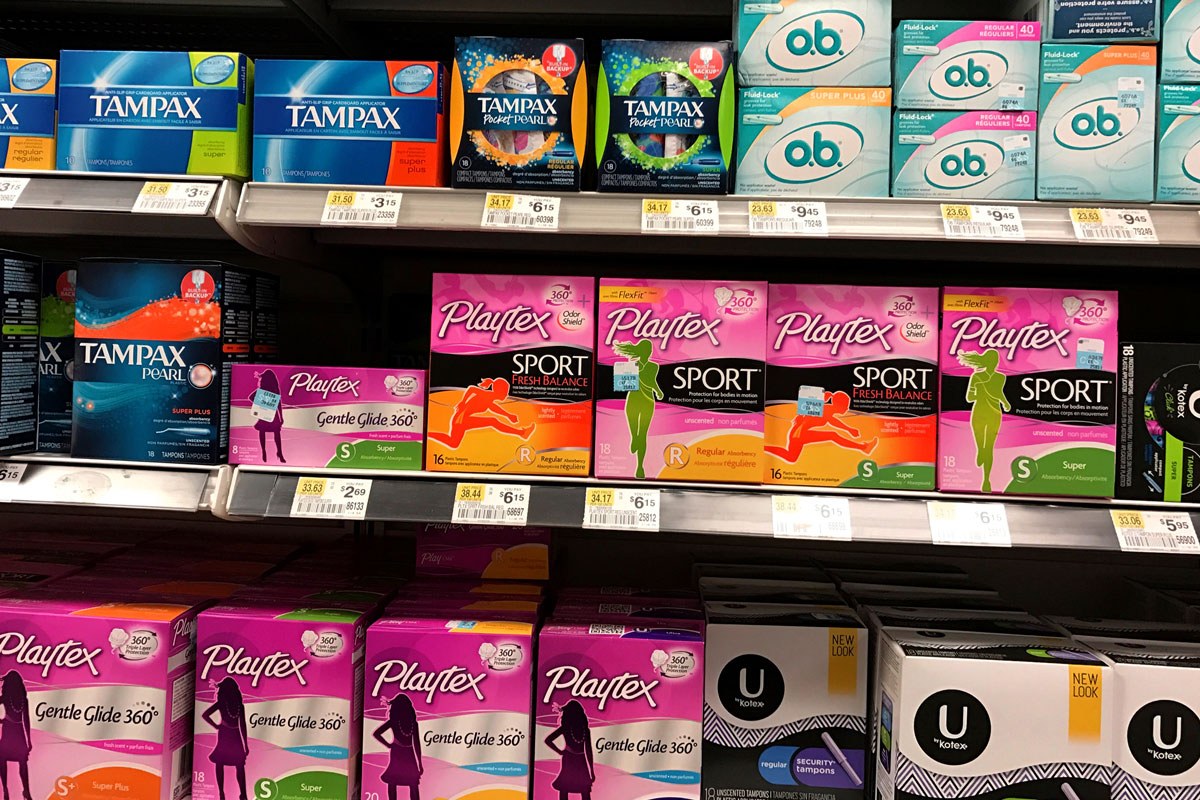 This week, three pieces of legislation were signed making feminine hygiene products more accessible for women and girls in Illinois. House Bill 641, House Bill 155, and House Bill 310 all remove financial barriers that have previously prevented individuals from purchasing hygiene products. The legislation builds on steps already taken in Illinois to expand reproductive equity and protect women’s access to healthcare. Read below to learn more about the new laws.
House Bill 641
No college student should have their education interrupted due to the inability to access pads, tampons, or other feminine hygiene products. To support women pursuing higher education, HB 641 requires all public universities and community colleges across the state to provide free feminine hygiene products in campus bathrooms.
The Board of Trustees at colleges and universities will determine the funding needed to meet the newly created requirement.
“Period poverty is a public health crisis, and these laws will enhance the everyday lives of people struggling to afford necessary menstrual hygiene products,” said State Senator Karina Villa (D-West Chicago). “Access and affordability of period products will no longer be a barrier to a student’s proper education or a person’s well-being in Illinois.”
“This legislation is an important step in normalizing menstruation. Approximately half our population experiences menstruation throughout a significant portion of their lifetimes,” said State Representative Katie Stuart (D-Edwardsville). “This is a normal function of our biology and needs to be seen and treated as such. Menstrual hygiene products should be in restrooms in our public spaces, just like any other hygiene products, and I want to thank the institutions of higher education across the state for coming to the table to work with me to make this happen on their campuses.”
HB 641 is effective immediately.
House Bill 155
Illinois women living at or below the poverty line often face the difficult decision of choosing between paying for food or housing or buying diapers or feminine hygiene products. HB 155 requires the Illinois Department of Human Services (IDHS) to apply for a waiver from the U.S. Department of Agriculture's Food and Nutrition Service, that would pave the way for recipients of the Supplemental Nutrition Assistance Program (SNAP) and the Special Supplemental Nutrition Program for Women, Infants and Children (WIC) to use the two programs for diapers and menstrual hygiene products.
At this time, the federal waiver is not available to states, and feminine hygiene products are not currently allowable for SNAP or WIC. The administration will continue to advocate for the federal government to create a waiver to help ease the financial burden for thousands of women across the state.
“Across the country, 1 in 4 women regularly struggle to purchase menstrual products due to lack of income,” said State Representative Barbara Hernandez (D-Aurora). “Today, Illinois is taking steps to help low-income women in our state overcome that challenge. Fighting against problems like period poverty is a privilege, and I’m so happy to be able to move forward on this issue."
HB 155 is effective January 1, 2022.
House Bill 310
To protect the health and safety of the state’s most vulnerable residents, HB 310, the Feminine Hygiene Products for the Homeless Act, requires all homeless shelters granting temporary housing assistance to women and youth to provide products such as sanitary napkins, tampons, and panty liners free of charge, if their budget allows.
“People who have been deprived of so much should not be forced to use other items as makeshift sanitary products,” said State Senator Christopher Belt (D-Swansea). “I cannot personally imagine the indignity women in homeless shelters feel. Today, however, is a step toward ensuring no one else has to feel the pain or embarrassment of not having clean, safe feminine hygiene products.”
“These bills are about providing a lasting and sustainable solution to an increasingly prevalent problem by establishing access to fundamental supports for vulnerable individuals desperately in need,” said State Representative LaToya Greenwood (D-East St. Louis). “I remain committed to serving as a strong advocate for at-risk women and girls, particularly those whose voices are not being heard.”
HB 310 is effective January 1, 2022.
The legislation furthers ongoing work to make Illinois a national leader in ensuring women’s healthcare is a right, not a privilege. In 2019 the Reproductive Health Act became law, guaranteeing that women in Illinois have the right to choose. Additionally, the Breast and Cervical Cancer Program was expanded, which provides free screenings and diagnostic services to uninsured and underinsured women and also expanded insurance coverage for mammograms and other breast cancer screenings. Earlier this year, legislation was signed granting Illinoisans access to birth control over the counter.
- Details
- Category: News
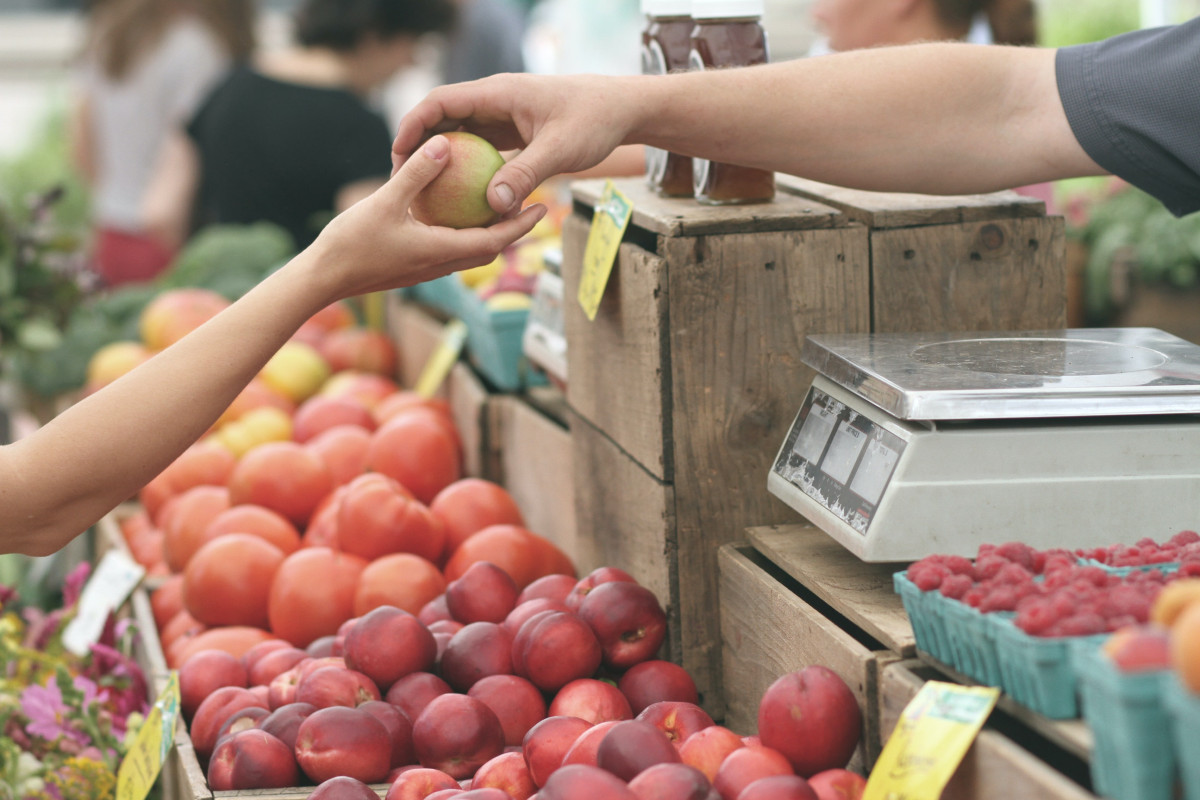 As part of the Farmers' Market Nutrition Program, the Illinois Department of Human Services is providing booklets of coupons to qualifying women, children and seniors at nutritional risk for use with an authorized IDHS farmer at a farmers' market or roadside stand. Seniors have until Oct. 31 to use their FMNP benefits.
More Articles …
Page 2 of 8
eNewsletter Signup
Contact Info
Springfield Office:
325-C Capitol Building
Springfield, IL 62706
(217) 782-8250
Peoria Office:
1203 East Kingman Ave.
Peoria Heights, IL 61616
(309) 677-0120
Bloomington-Normal Office:
216 N. Center St.
Bloomington, IL 61701
(309) 808-2345